ARTIST INTERVIEW: POPPY CAUCHI, RCA CASS SCHOLARSHIP GRADUATE 2025
Posted by Cass Art on 6th Jan 2026
The Cass family has been supporting artists for over 125 years, and today, The RCA Cass Scholarship helps future generations of artists. The scholarship supports one student each year at The Royal College of Art by funding their tuition fees in full.
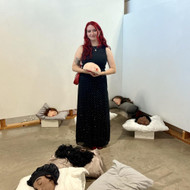
We caught up with this year’s graduate, Poppy Cauchi, to find out about her work, her experience of studying at the RCA and how the scholarship has helped her as she begins her creative career.
Hi Poppy, it’s great to chat with you! Tell us a bit about your creative journey so far.
I’ve been making things for as long as I can remember. As a child I was constantly building costumes, props, and miniature worlds, which grew into a lifelong instinct to understand emotion through materials. I trained in Prop Making for Theatre and Film at the Royal Central School of Speech and Drama, where I spent three years developing strong technical skills and learning how objects quietly hold narrative and emotion.
Working professionally in theatre shaped my sensitivity to audience experience and emotional pacing. Over time, I felt a growing need to move towards my own narratives. This led me to the MA Sculpture programme at the Royal College of Art.
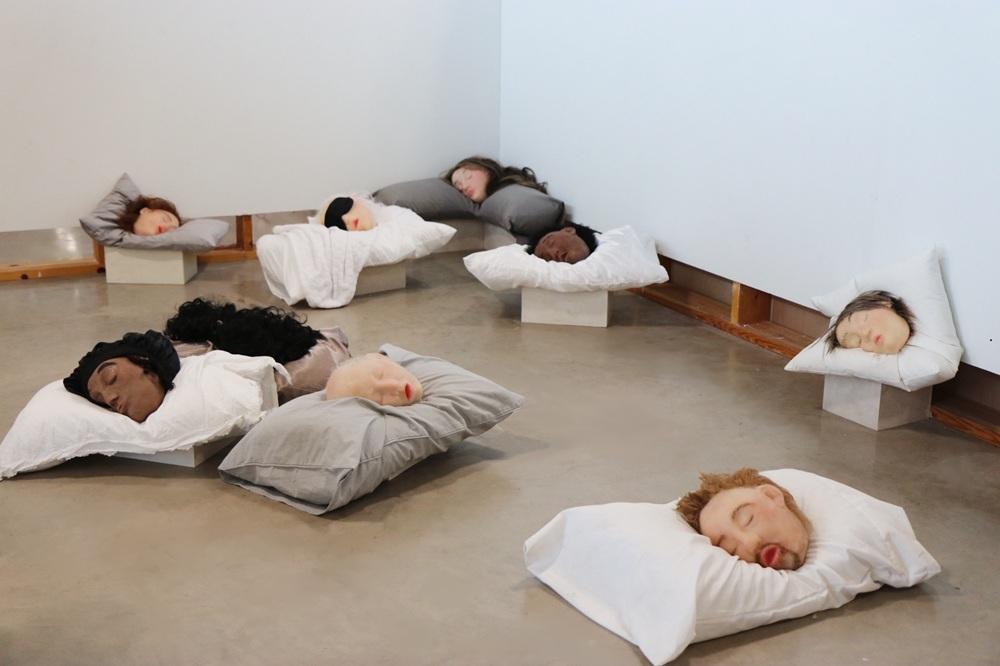
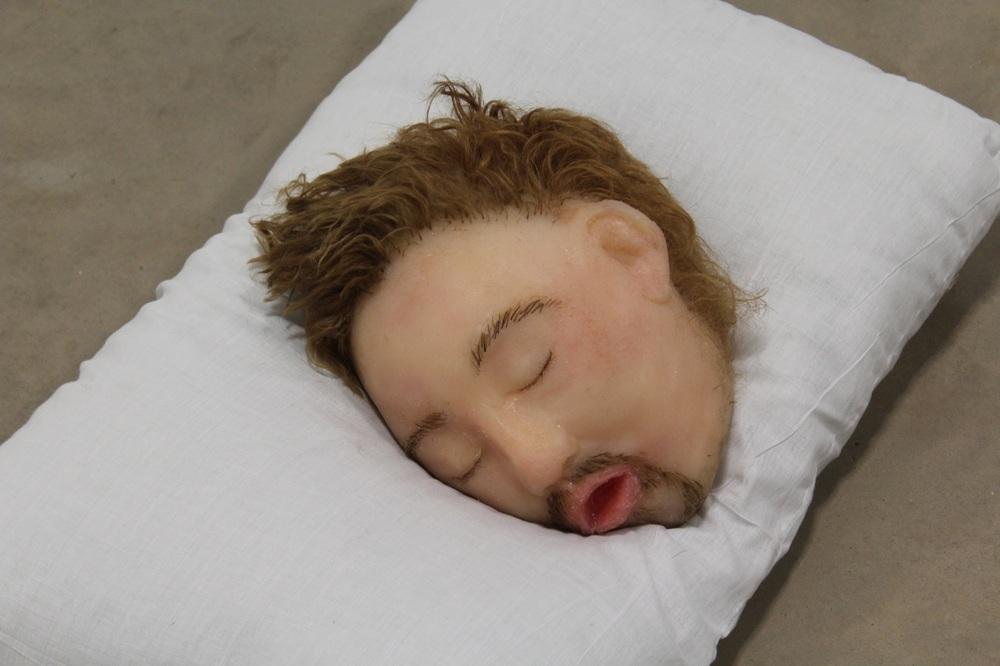
At the RCA, I merged my prop-making background with my own conceptual concerns: trauma, healing, childhood, and the uncanny. My practice shifted towards tactile, emotionally charged sculpture using silicone, latex, hair, and domestic objects, culminating in the Sleepers series shown at my RCA Degree Show.
How did the RCA Scholarship help you during your MA, and how did your work develop throughout the year?
The RCA Scholarship was crucial in allowing me to fully commit to my practice. It removed financial pressure and gave me the freedom to take material risks, particularly with expensive processes like silicone and latex casting. This freedom allowed me to experiment, to fail, and to remake work without compromise.
Before the RCA, my work was more overtly confrontational and materially bold. During the MA, it became quieter and more psychologically focused. I began exploring sleep as a site of vulnerability, safety, and trauma, thinking about how rest reflects trust, belonging, and emotional history.
The year allowed me to slow down, trust subtlety, and embrace softness as a conceptual and political gesture.
What is a typical day in the studio like for you?
No two studio days are ever quite the same. Some days are very physical, involving mould-making, casting latex or silicone, punching hair, painting, or building up delicate layers of skin tone. Other days are quieter and more reflective, spent writing, researching mythology or trauma theory, sketching, or photographing work. I often move between several sculptures at once, letting processes dry while responding to another piece.
Touch is central to my practice, so I’m constantly squeezing, stretching, and testing materials. I usually end the day by cleaning the studio and documenting progress, which helps me reflect and decide the next steps.
Can you explain the themes in your work and how you explore these?
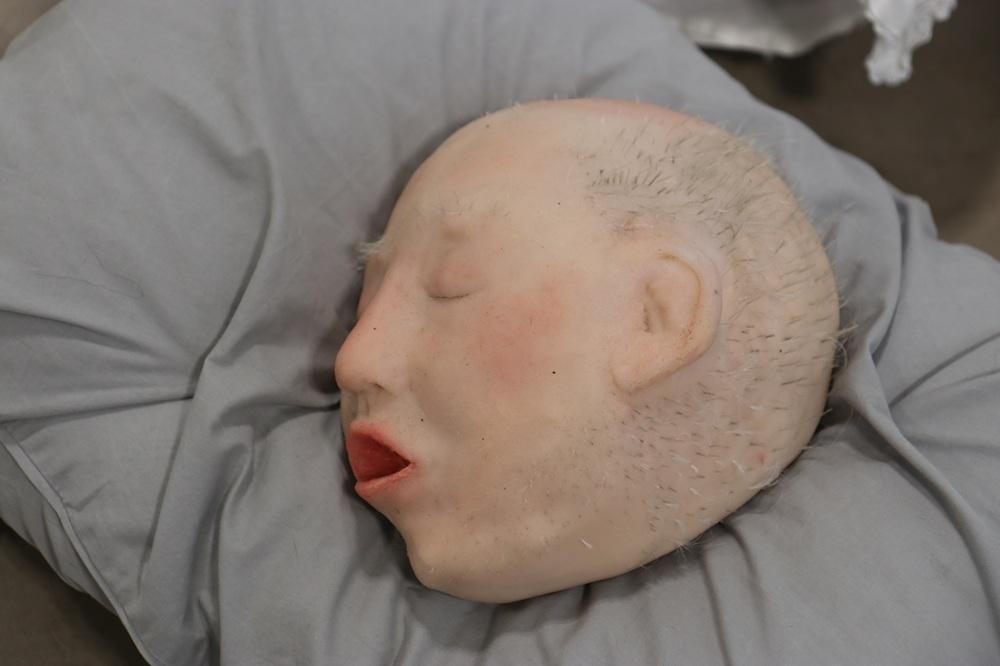
My work explores trauma, healing, childhood, and vulnerability, often through softness, surrealism, and tactility. I’m interested in how difficult experiences can be held within gentle forms, and how the body remembers what language often cannot express. Greek mythology frequently informs my work, acting as a framework for exploring timeless emotional states in a contemporary context.
Material choice is central to this exploration. I use silicone and latex to mimic skin, creating sculptures that look uncanny yet feel unexpectedly soft. Many of my works invite touch, encouraging viewers to squish or interact, disrupting traditional boundaries around sculpture and creating intimacy.
Tell us about the different characters in your ‘Sleepers’ series.
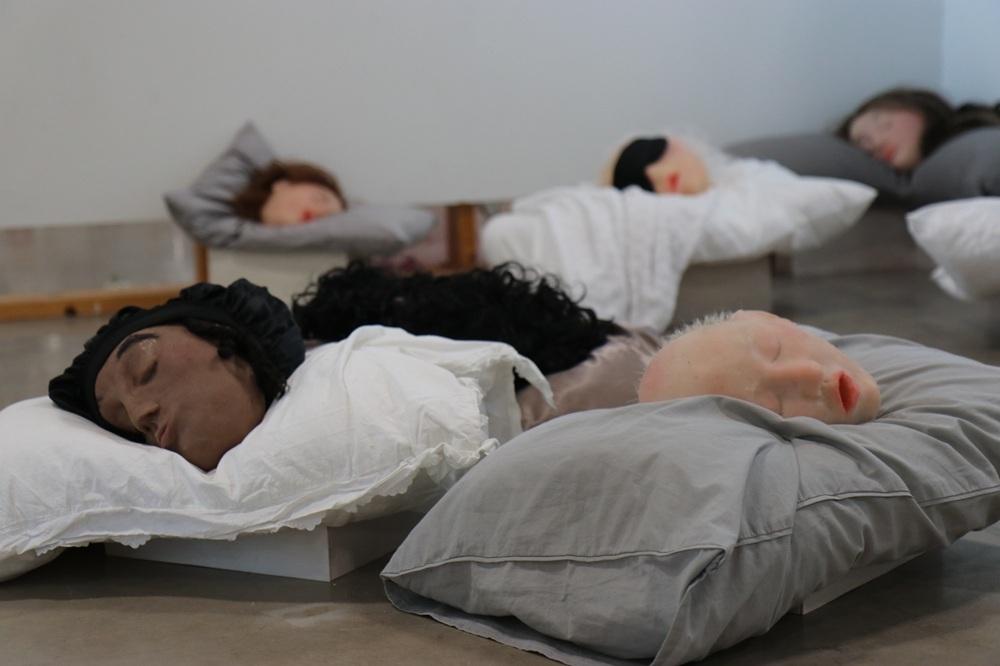
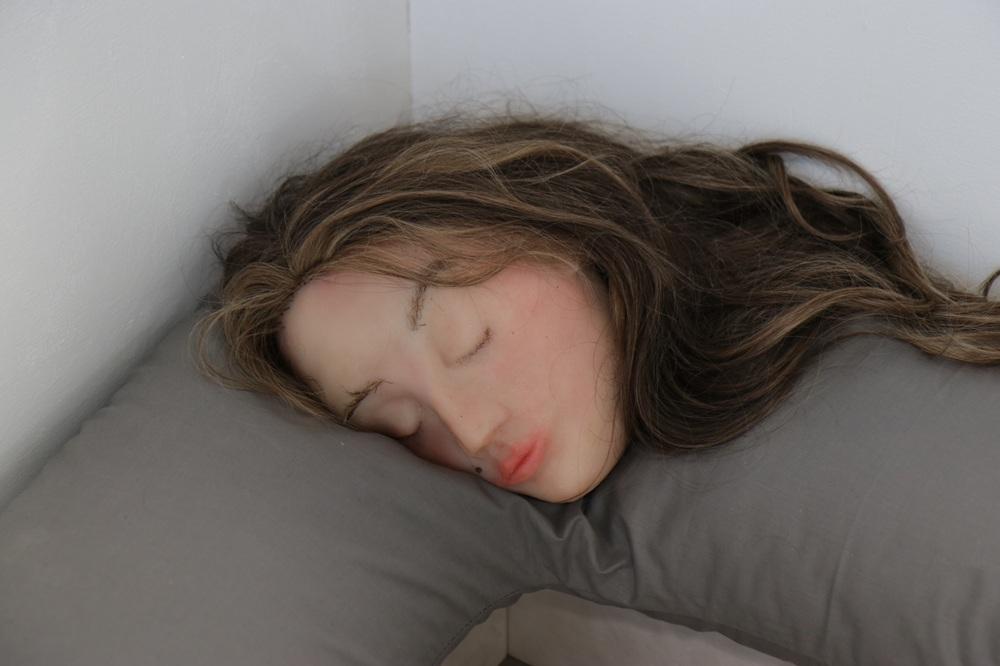
The Sleepers examine sleep as a psychological and bodily condition rather than a depiction of individual people. I’m interested in sleep not as a passive act of rest, but as a liminal and sometimes dissociative space, one that exists between the conscious and unconscious, safety and threat.
For many trauma survivors, sleep is deeply disrupted by hypervigilance, nightmares, or fear of going to bed, making rest itself an emotionally complex experience. The use of skin-like latex is intentional: it is soft and familiar, yet slightly uncanny, reflecting how trauma alters our relationship to comfort. A pillow may suggest safety, but the body can remain braced for danger.
Each sculpture in The Sleepers is framed as a relational “character” rather than a portrait. These include a Mother, a Father, a Daughter, a Son, a Brother, a Sister, a Cousin, a Boyfriend, and a Girlfriend. These roles were chosen because they represent the people we are most likely to sleep near, trust, or be vulnerable around across different stages of life. By using familial and intimate labels rather than specific identities, the figures remain open-ended, allowing viewers to project their own experiences of care, tension, safety, or absence onto them. In this way, the characters function as emotional placeholders, reflecting how sleep is shaped by our relationships as much as by our bodies.
Sleep is also connected to belonging. The Sleepers act as vessels for shared experiences of rest shaped by memory, displacement, and care. Through this series, I aim to give physical form to something usually invisible and deeply personal.
Walk us through the process of making one of your ‘Sleepers’ sculptures.
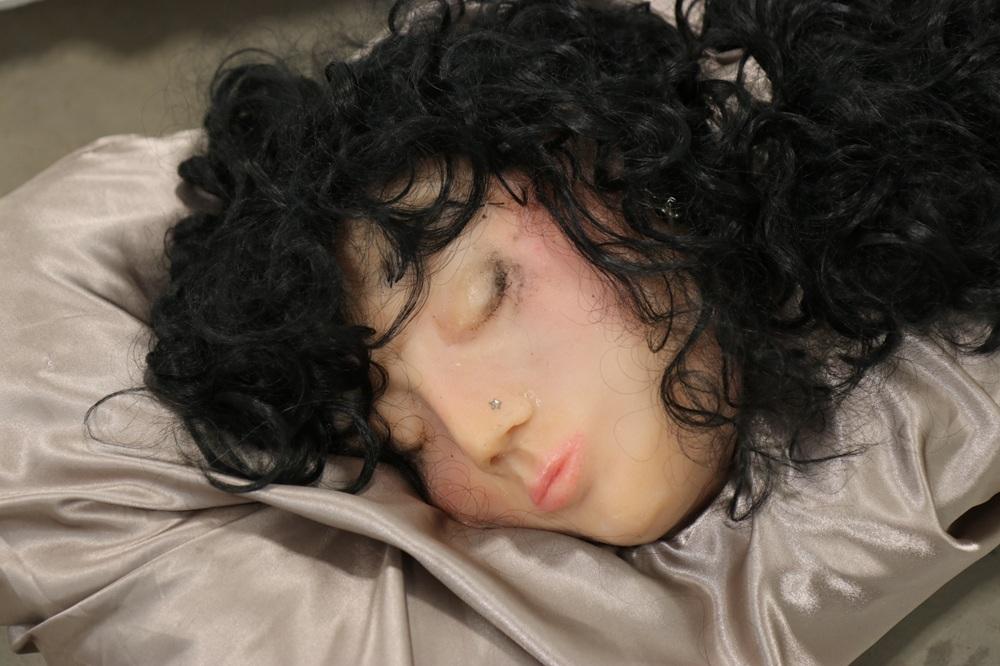
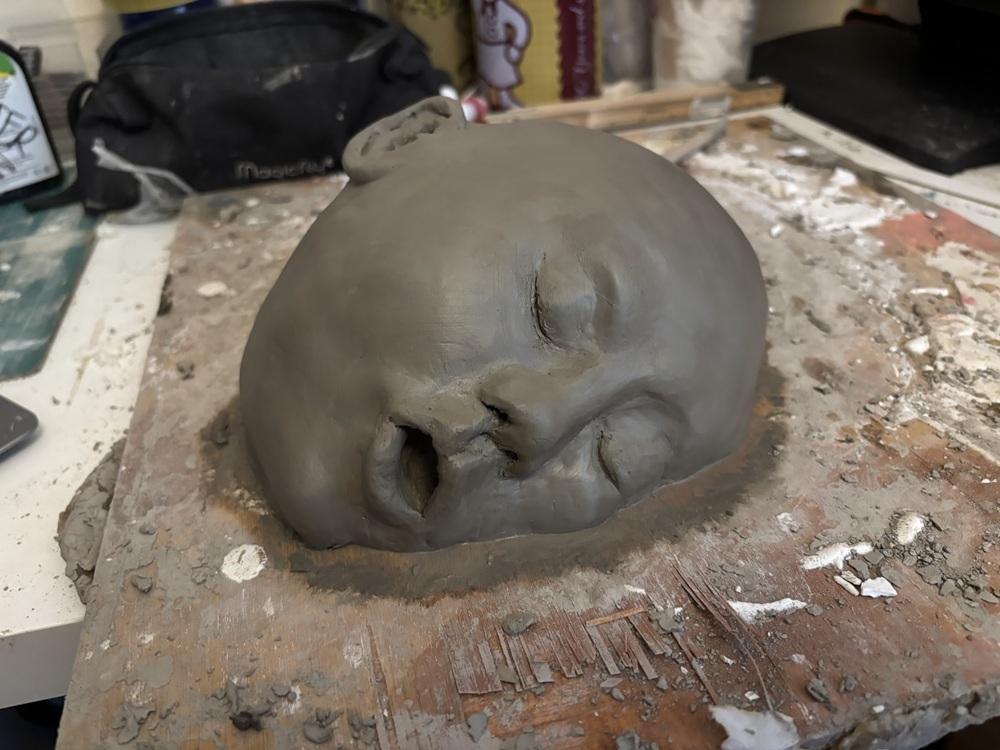
The process begins with sculpting a head in clay, focusing on a subtle, emotionally ambiguous expression. I then create a multi-part mould, which allows me to cast the sculpture in silicone. The silicone is built up in thin, translucent layers of carefully mixed colour. These layers are essential in mimicking the depth of real skin, allowing underlying tones to show through and creating a sense of warmth, fragility, and lifelikeness that draws the viewer in at close range.

Once demoulded, I refine the surface by trimming, patching, and smoothing, paying close attention to seams and transitions so the surface remains uninterrupted and bodily. Hair is then individually punched into the silicone, a slow, meditative process that can take several days and contributes to the intimacy of the work.
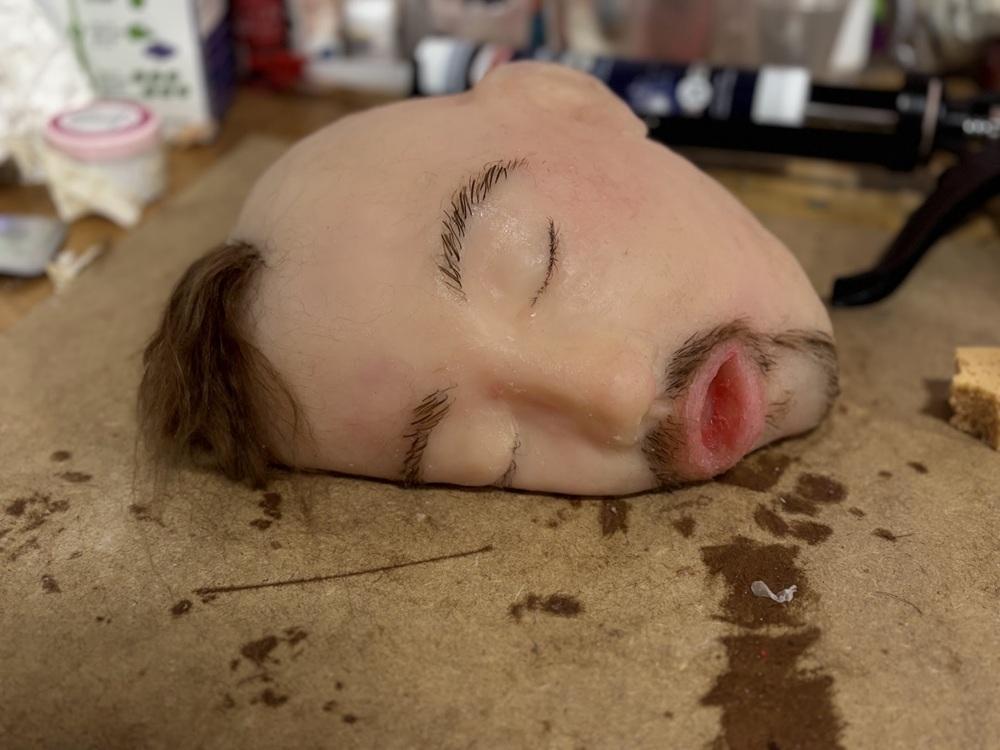
I then apply multiple washes of pigment, gradually building bruising, redness, shadow, and variation across the skin. This colouring is a crucial stage, as it guides how the audience emotionally reads the figure—whether the head appears restful, vulnerable, tense, or held in a state between comfort and unease. The realism achieved through these layers encourages prolonged looking and a bodily empathy from the viewer.
Finally, the head is carefully positioned on their pillow, completing the work as both an object and a presence.
Beyond your studio practice, you are a committed activist, raising awareness about non-contact abuse and cyber-crime. How does this feed into your art?
My activism around non-contact abuse and cyber-crime strongly informs my practice. These forms of harm often leave no visible evidence, yet have long-lasting psychological and bodily effects. That invisibility parallels many of the concerns in my work: hidden trauma, quiet suffering, and the internalisation of harm.
Rather than illustrating activism directly, my sculptures create spaces of care, vulnerability, and emotional honesty. I’m interested in softness as a radical response to violence, and in making work that validates experiences that are often dismissed or misunderstood.
Both my art and activism are rooted in visibility, empathy, and challenging silence, encouraging viewers to slow down and engage with difficult emotional realities.
Do you have any advice for future art students?
Trust your instincts, even when your work feels strange or uncomfortable. Your sensitivities and obsessions are valuable - follow them. Allow yourself to fail, remake, and change direction without guilt; uncertainty is part of the process.
It’s also important to learn how to talk about your work clearly and honestly, not just conceptually but emotionally. Being able to articulate why your work matters will help you advocate for yourself.
Finally, remember that rest is part of practice. You don’t have to be constantly exhausted or struggling to make meaningful work.
What have you been up to since your graduation and what’s next for you?
Since graduating, I’ve been actively building my practice alongside professional work. I’ve been exhibiting in group shows across London, using these opportunities to test new ideas, meet audiences, and continue developing the Sleepers series beyond the RCA context. Alongside this, I’ve been working on commissioned projects, which allow me to apply my material skills in new ways while maintaining a close relationship with clients and collaborators.
Alongside my studio practice, I remain engaged in activism around trauma, non-contact abuse, and bodily autonomy. This has included producing activist materials and taking part in conversations at Parliament, advocating for greater recognition of lived experience within policy and public discourse. These experiences continue to inform the ethical and social grounding of my work.
I also continue to work in theatre across the West End, which remains an important part of my creative life. Theatre has deeply shaped how I think about space, audience, and emotional pacing, and this continues to inform my sculptural practice.
Looking ahead, I’m focused on expanding my exhibition profile, developing community-led iterations of my work, and pursuing residencies and commissions that support long-term, socially engaged sculptural work.
Thanks Poppy!
See more of Poppy’s work at poppycauchi.com, follow her on Instagram @poppycauchi and her RCA degree showcase here.
Feeling inspired?
Read more artist interviews on the Cass Art blog.

