Two years ago, Pro Arte approached me to try out some of their range. It came at the right time — I had been obsessed with brushes since I started painting.
Of all the tools that affect your style, brushes are by far the ones that dictate it most. More than paint, more than ground, more than references or composition. Even within figurative and realist painting, you will get completely different results depending on whether you pick a flat synthetic or a round hog brush — and the differences go further: long tip or short tip, long handle or short handle, all change what ends up on the surface.
The more painterly and expressive you want your work to be, the more distance you need from the canvas. Brushwork gets more dynamic when made from a distance; precision is naturally achieved up close. Long-tip brushes follow the same logic — the extra length creates a natural flex that produces freer, more spontaneous strokes. A lot in painting is determined by the pressure you apply, by the flexibility of the bristle, by the agility of your wrist and hand. Brushes are, truly, an extension of your brain, your arms, your hands.
Over the years I tried thousands of brushes, and each served me during a particular phase. Early on I was obsessed with shapes — flat synthetic brushes were perfect for that. More recently, my obsession has been edges. Soft, intricate, lost, volatile, sharp, invisible. Being able to control and achieve a wide variety of edges is something I care deeply about — alongside the quality of the brushstroke itself. As I pushed further into that territory where realism and boldness meet, I needed tools that could do both.
When Pro Arte sent me their sample hog brushes, everything shifted. The edges that had resisted me for years started forming naturally — not as an afterthought, not forced. Just happening as I painted. The brushstrokes were responsive in a way I hadn't experienced before.
After that initial sample, we spent several more months testing, and I asked whether some customisations could be made — extending the tip length on certain brushes, and lengthening the handles.
The Set
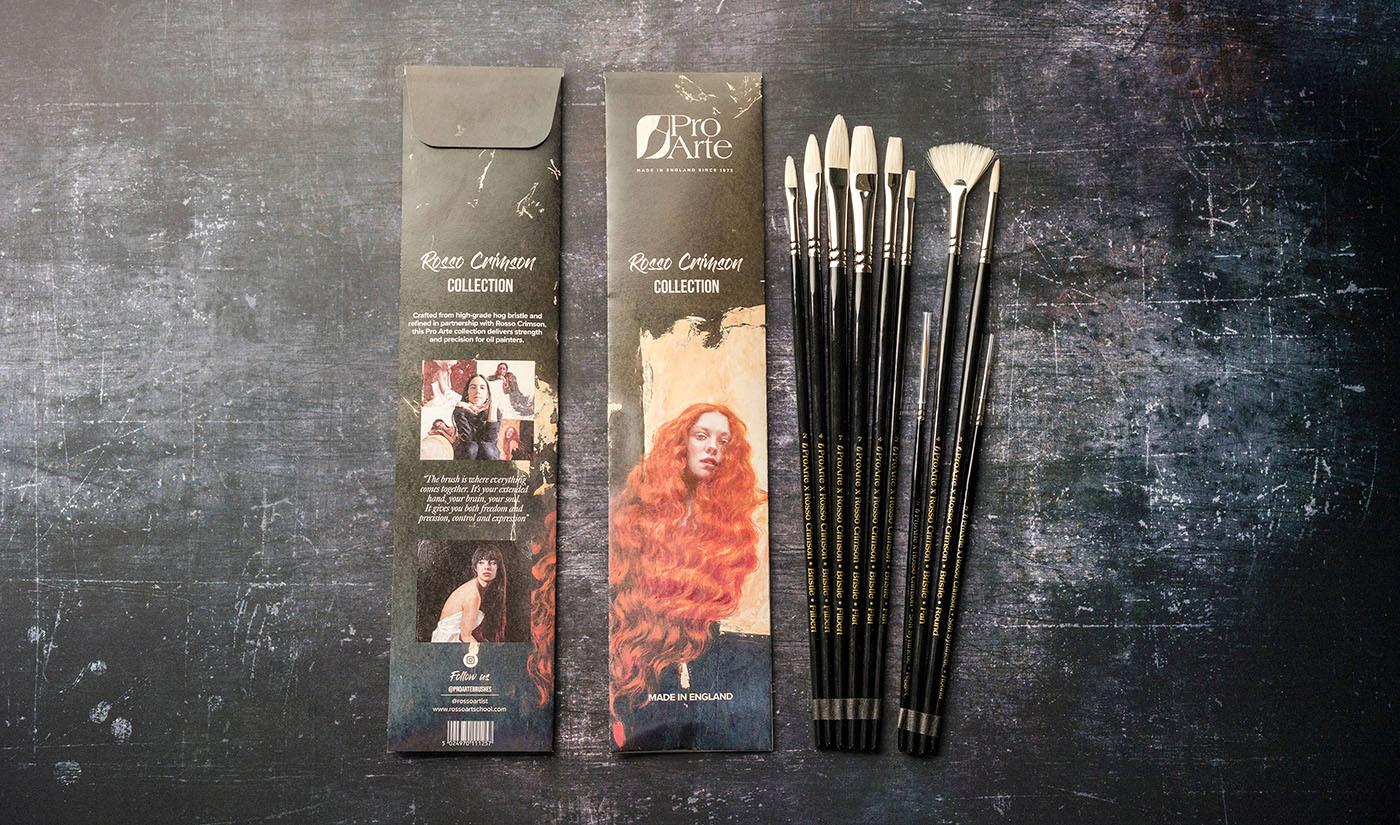
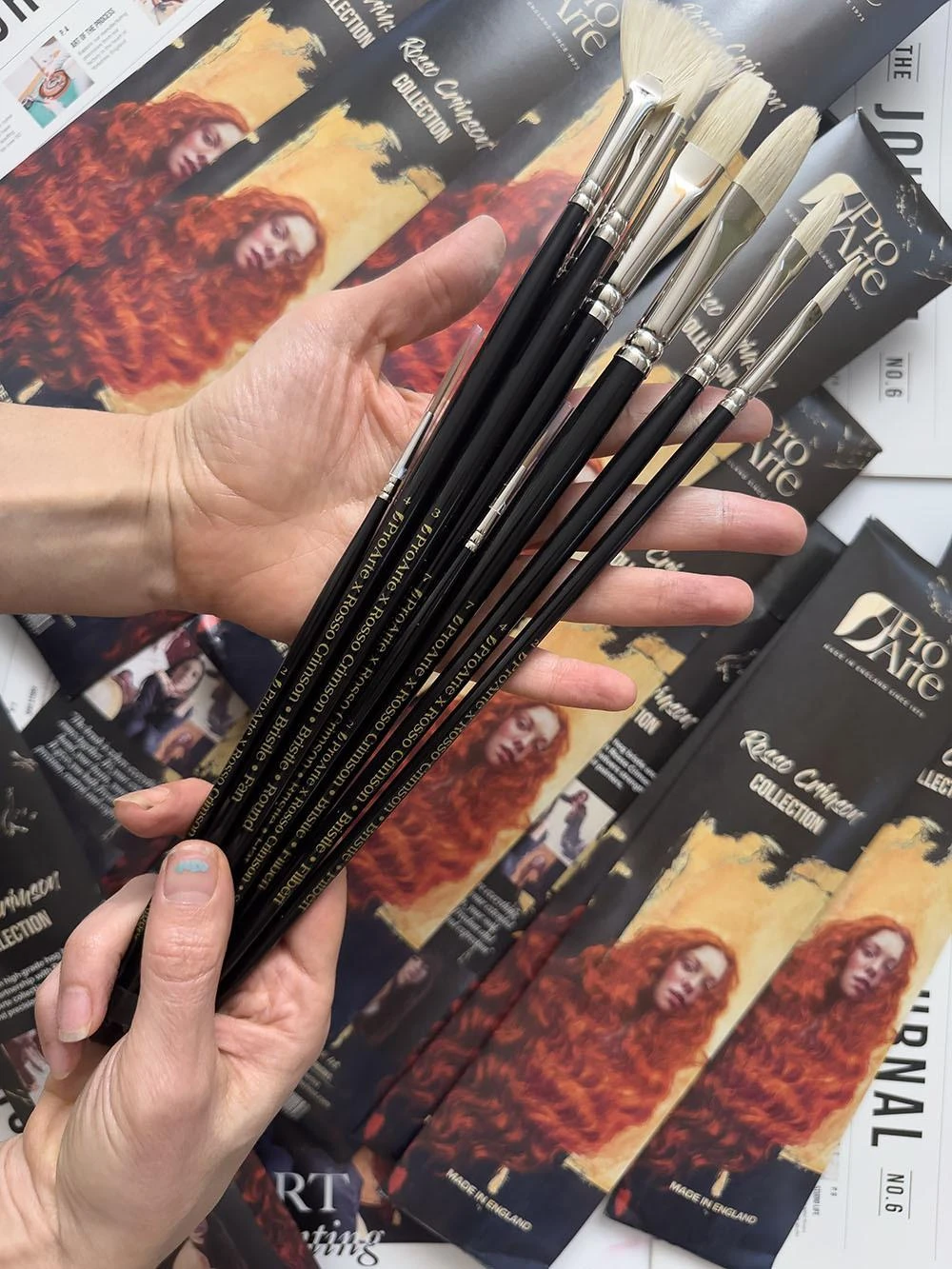
The collection contains ten brushes in total.
Eight are long-handle, long-tip hog brushes — filberts, flats and rounds — ranging from small to medium to large. This is an ideal combination for working on small to large-scale portraits and figures. I use them across every stage: sketching, blocking in, filling the portrait, modelling, and even rendering.
My favourite is the fan brush. This is what I use for what I call the "one-stroke hair" — a single stroke that blocks in convincingly realistic hair. A fan brush is now always within reach in my studio. It's also exceptional for glazing, wet-on-wet or on a dry surface. Because the bristles are soft yet firm, you can be as playful as you want — the fan brush is particularly ideal for loosening up at the start of a painting session.
I keep mentioning portraits because that is my main obsession — but these brushes are equally wonderful for plein air, landscapes, flowers, garments, and expressive abstract backgrounds.
The two soft synthetic brushes were a deliberate addition for those final, delicate touches — highlights, a juicy red on the lips, dark accents — marks that need to rest softly on what's already been built underneath, without pulling colour or paint out. The rigger is an exquisite tool for cast shadows — the fine hairs on the forehead, for instance.
Both synthetic brushes come with a longer handle than standard — because I believe in keeping distance from the surface even during detail work. The closer you get, the heavier the mark, and you risk losing that painterly quality.
Pro Arte made a beautiful object — the sleeve is elegant, the handle carries my name, and the feel is sleek in the hand.
They are versatile, responsive, and I'm certain they will adapt to your hand and your style.
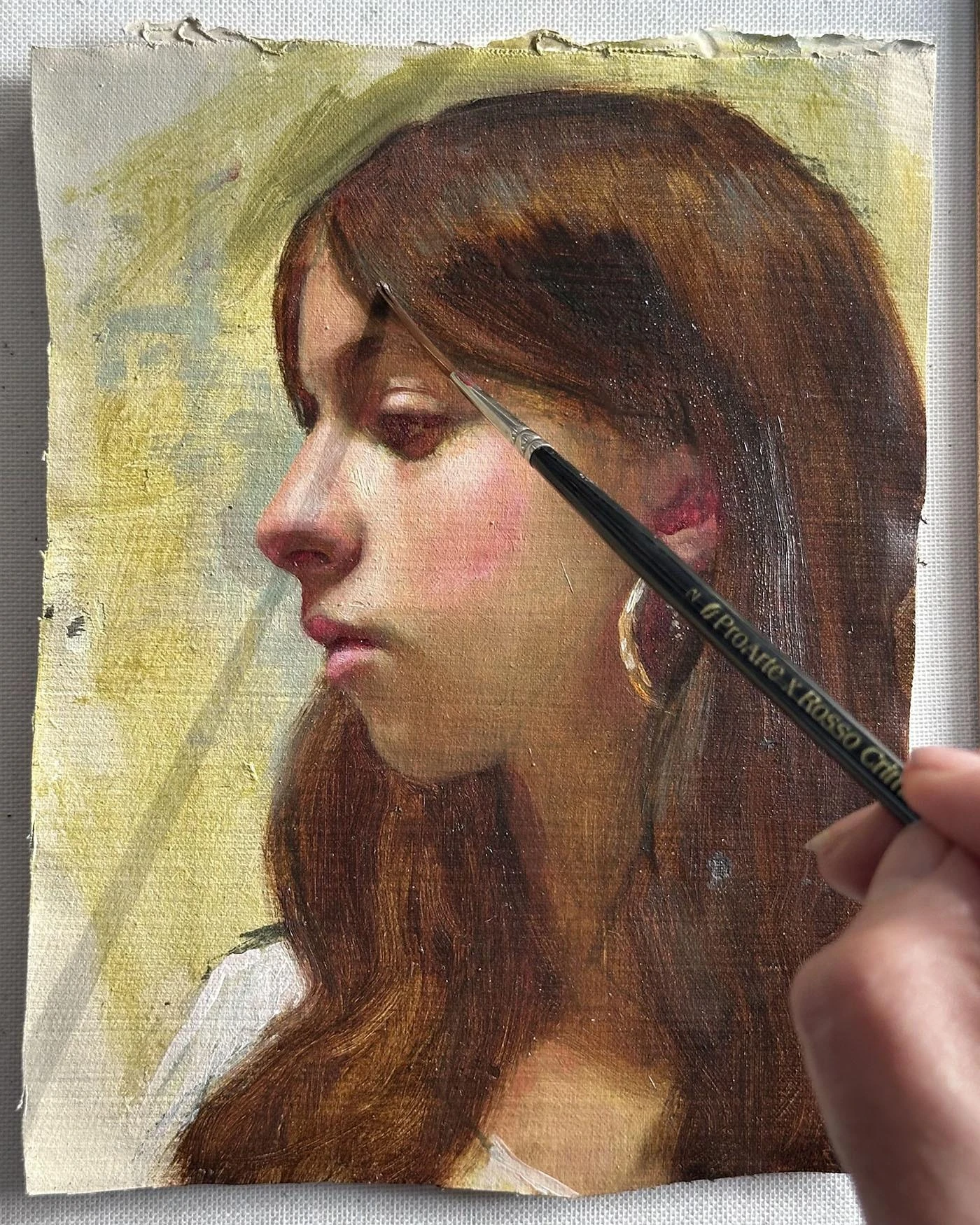
Portrait of my daughter, in warm light — oil on linen, 2025
For this portrait I used the long filbert and flat brushes (both No. 2) for blocking in and modelling; sizes 4 and 6 for broader shapes and the hair. The soft synthetic round for the red accents around the lips and nostril and for the highlights in the earring; and the rigger for the cast shadows of the hair across the forehead.
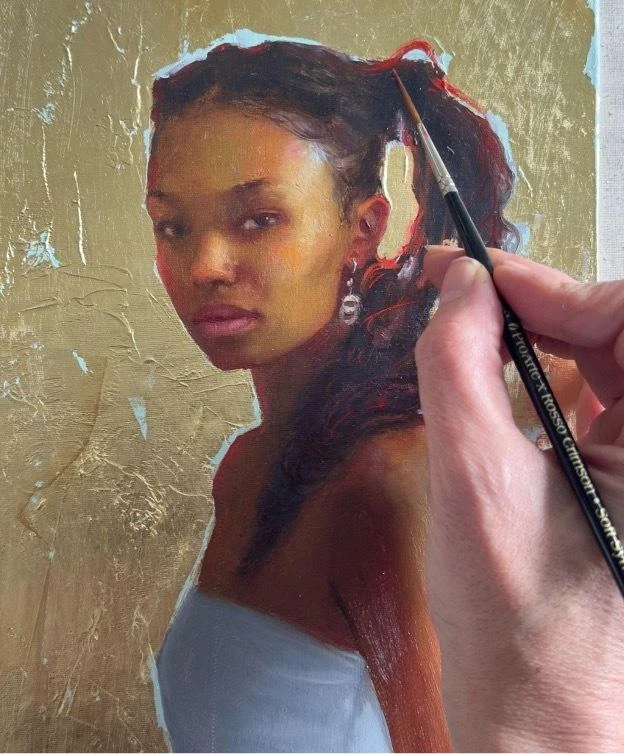
Ella in Gold — oil and gold leaf on canvas on panel
For this portrait I used the No. 2 hog filbert and No. 2 flat hog brush for the figure; the fan brush for the hair; and the rigger for the red highlights running through it.
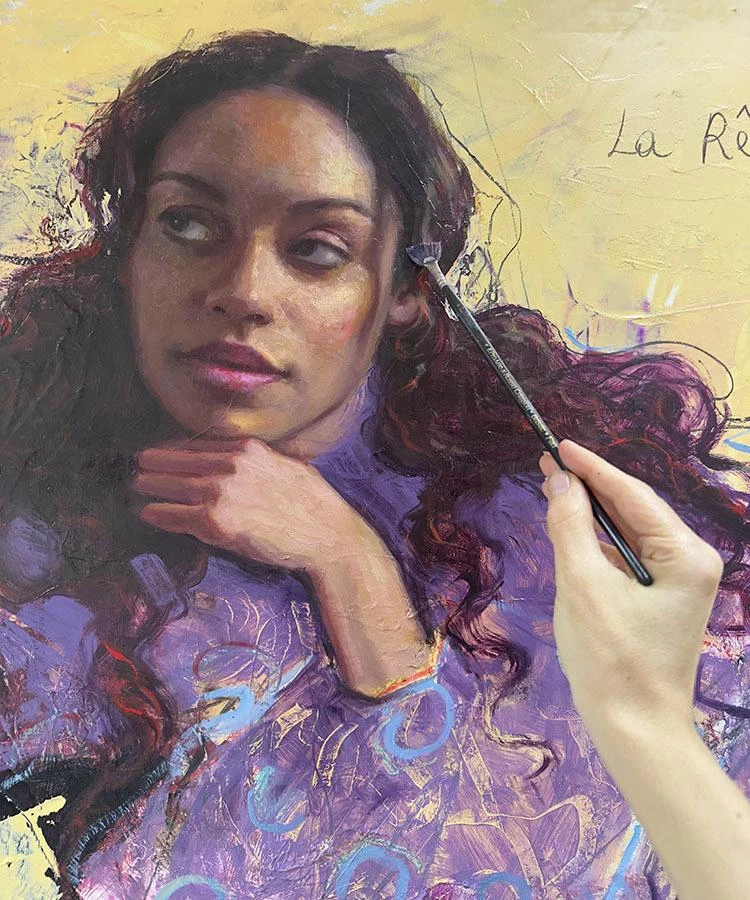
La Rêveuse — oil on canvas, 120 × 100 cm, 2026
For this large painting I used the entire set. I began with a loose sketch of the figure, using the larger size 6 brushes to set the rhythm and expressive marks across the canvas, then moved down to sizes 2 and 4 for rendering the portrait.
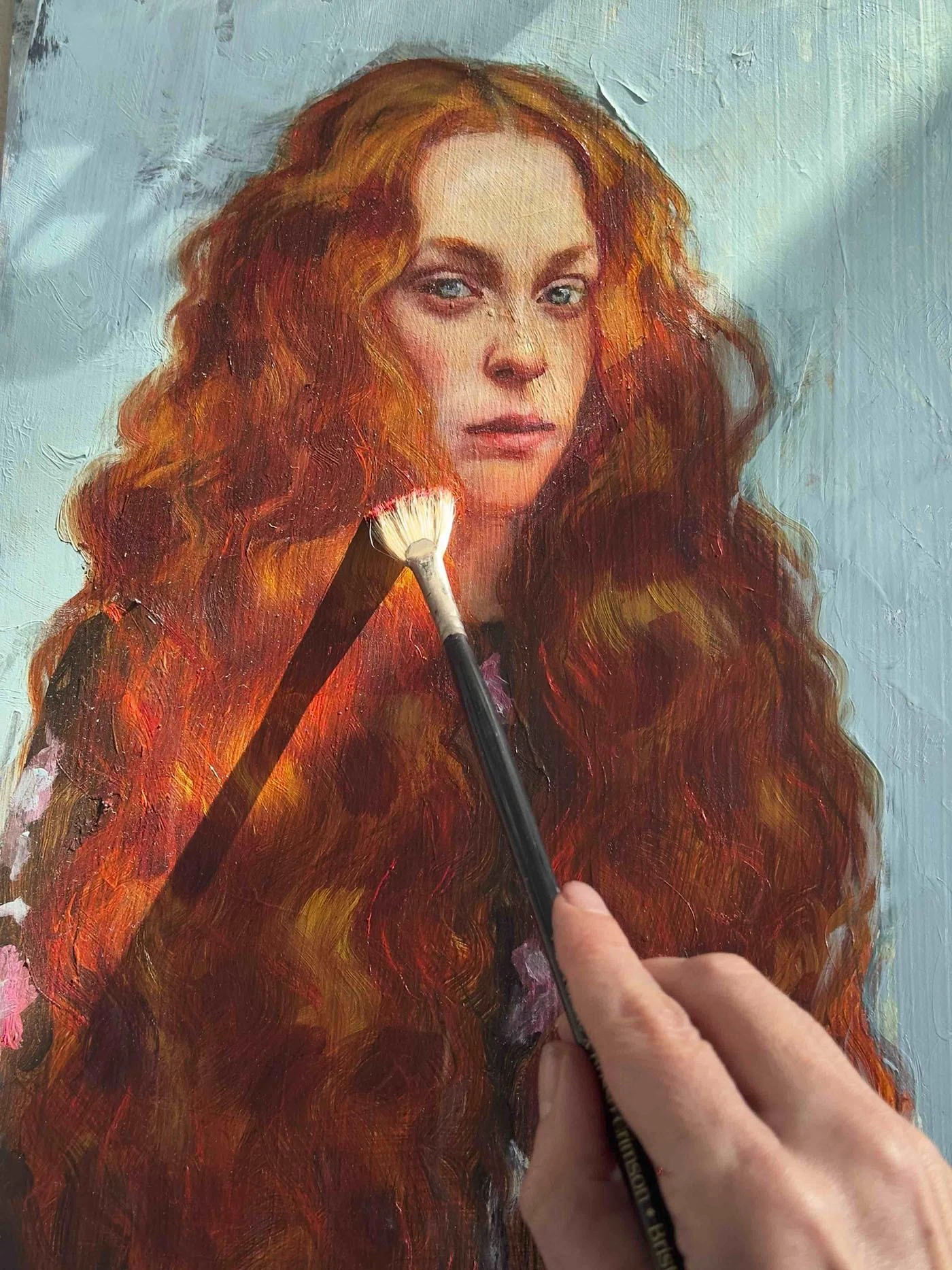
Red is for Passion — oil on panel
A close-up detail of the fan brush at work. It’s one of those tools that does more than you expect — the spread of the bristles naturally breaks the paint into fine strands, echoing the rhythm of individual hairs without overworking the surface.
What I keep coming back to is how it builds movement. Instead of placing each strand, you’re guiding the gesture — letting the brush catch and release the paint in a way that creates soft, shifting edges. There’s a looseness to it that feels closer to how hair actually sits and moves, especially when the paint is left to breathe rather than being blended down.
Used lightly, it skims the surface and picks out subtle variations; with a bit more pressure, it starts to pull the paint into longer, more fluid marks. It sits somewhere between control and chance, which is where a lot of the life in the painting comes from.