
Chloe Cox is a British hyperrealist portrait painter whose work has garnered national recognition and royal patronage.
In a career-defining moment, Chloe was commissioned by King Charles III to create a portrait for the Royal Collection, celebrating the legacy and contributions of the Windrush generation to British society. This prestigious commission underscored her ability to handle subjects of profound historical and cultural significance with sensitivity. In the blog we discuss her unique practice, approach to portraiture and experience being part of the HSFk Portrait Award.
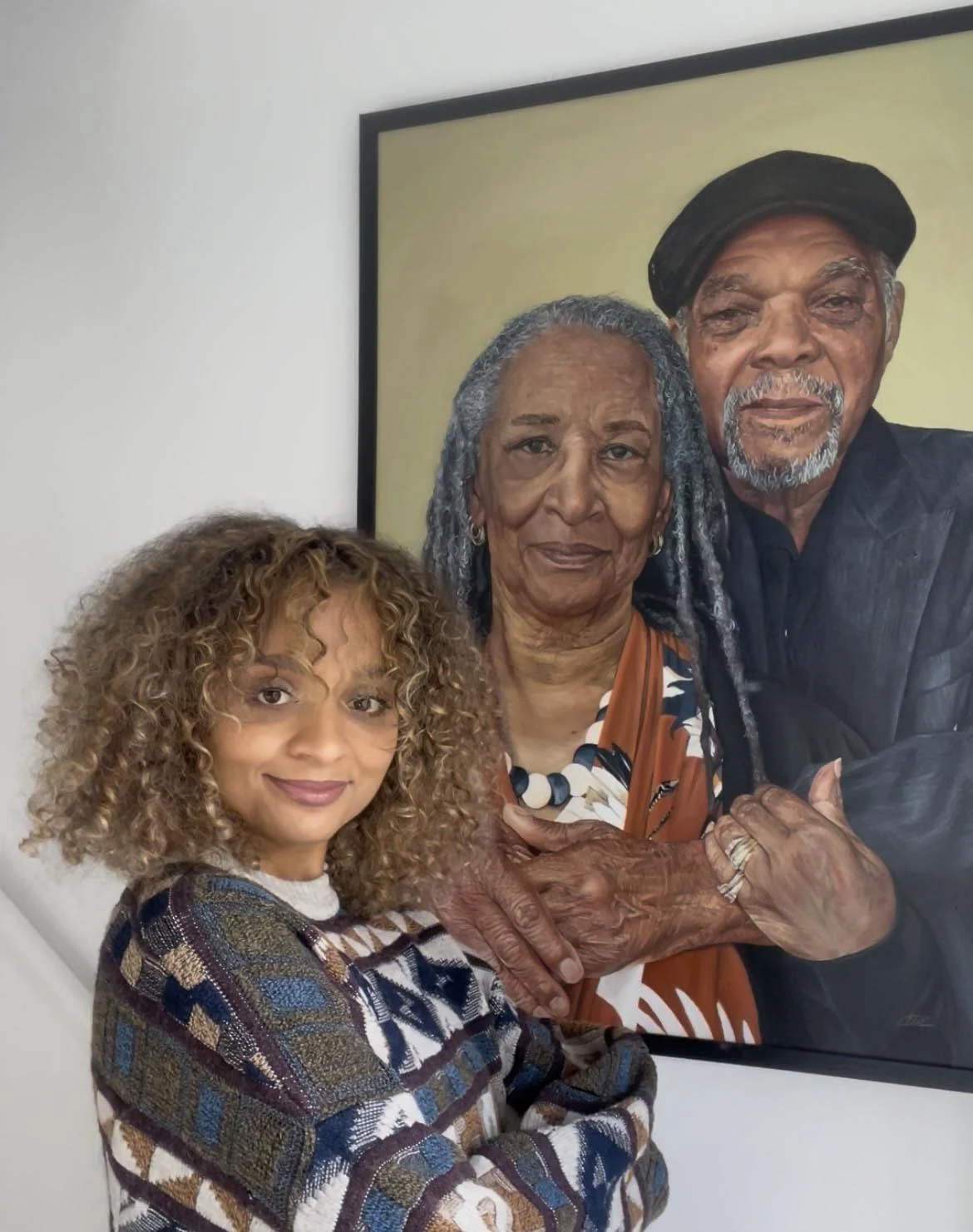
Congratulations on winning Second Prize at this year’s HSFK Award. What did it mean to have WMIY recognised in this way, and has the experience changed how you think about your work?
Thank you! It’s an incredible honour to win such a prestigious award. This is as good as it gets in the world of portrait competitions, and it’s been a dream of mine to be recognised by the HSFK one day. I never imagined it would happen so soon, at this stage of my career, so to come home as one of the actual prize-winners feels surreal.
It’s given me the greatest boost of confidence in my work. I feel like I’ve found my artistic voice: celebrating unsung stories. The judges’ feedback, that the piece was chosen not just for technique but for the compassion you feel from the sitters, confirmed something I’d suspected: that likeness alone doesn’t make a good portrait artist. What matters is what you choose to represent about the people you paint. It confirmed that meeting my sitters and getting to know them before I decide how to represent them will always be central to my process (which is lucky, because it’s what I love to do anyway.)
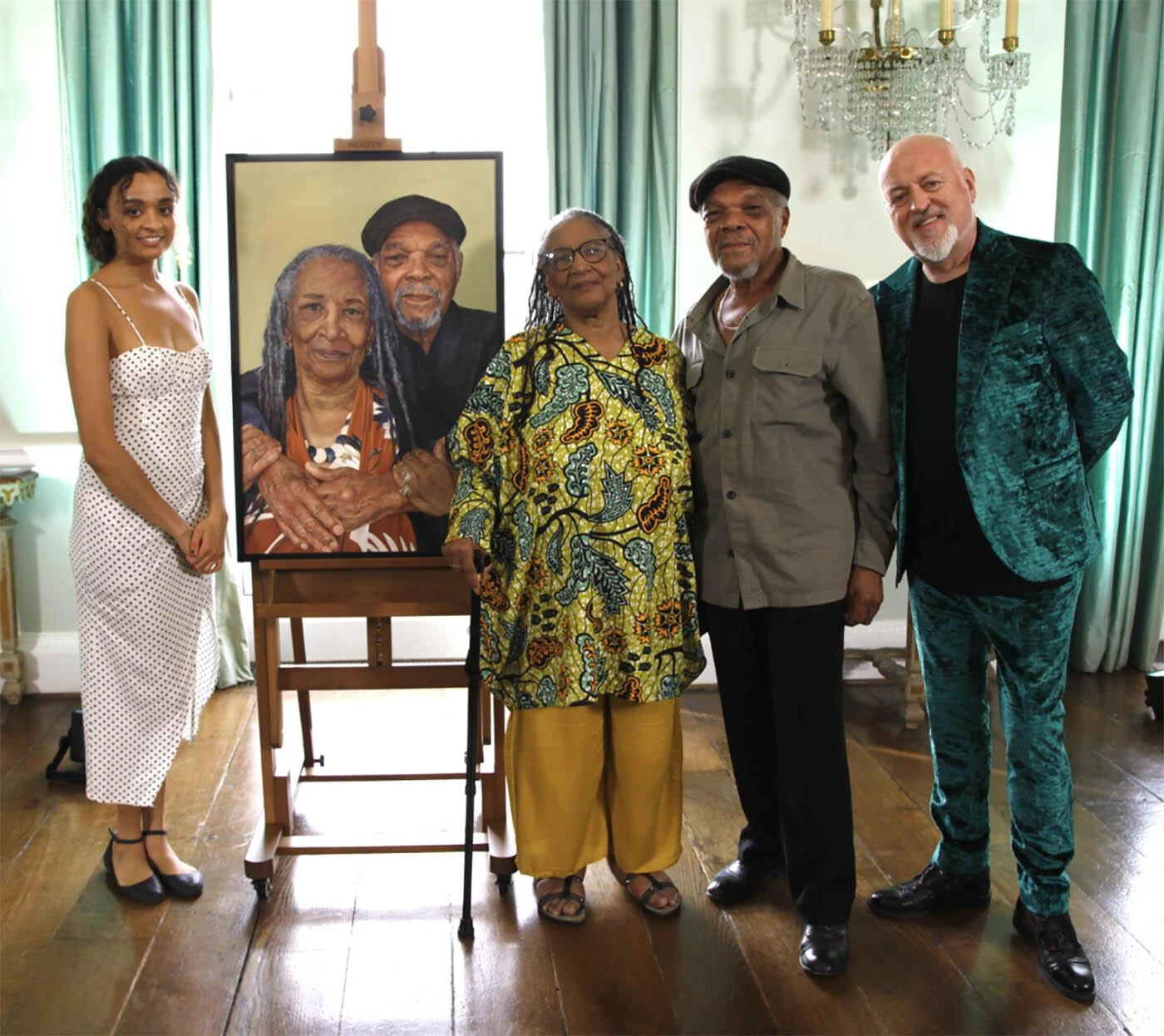
Your portraits are highly realistic, but they also feel very considered in what they reveal about the person. What are you looking for in a sitter beyond simply capturing a likeness?
It’s important for me to spend time with my sitters, to understand as much about them as I can before I choose a pose. Paintings are lasting relics that often hold a prominent place in a home or a museum, so they should make you feel like you know the person — and the sitter, in turn, should feel represented by the portrait.
That’s why likeness is only half of it. The other half is finding a composition that says something about the sitter worth remembering. It isn’t easy. There’s real pressure to understand someone deeply in a short space of time, but ultimately it comes down to identifying whatever feels most significant about a person and finding a way to represent it. For Marva and Lionel, that was their love for each other and their compassion for others, which was the bedrock of everything they achieved.
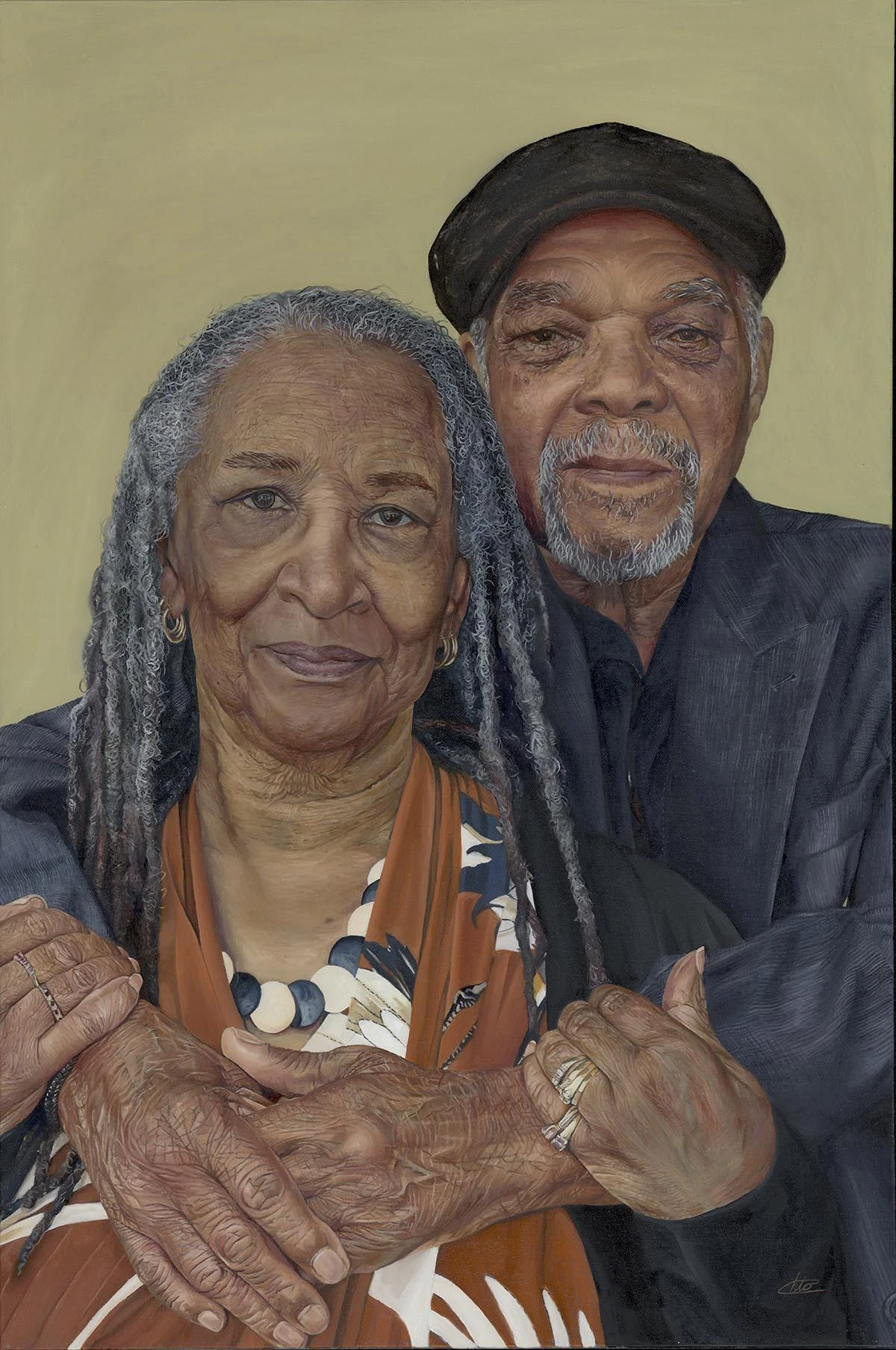
Conversation seems to play an important part of the way you get to know the people you paint. How does that relationship develop into decisions around pose, composition, expression and atmosphere?
Conversation doesn’t just reveal someone’s life story and the things they’re most proud of, it also tells you about their mannerisms: how introverted or extroverted they are, whether they smile easily or hold themselves more sternly, how they use their hands, what they look like lost in thought. That gives you a much better sense of the person, which is why, even though I work from reference photos, I can’t simply use one a sitter sends me. It’s impossible to know which photo to choose if you don’t already know which one feels most true to the experience of meeting that person in real life. I need to see and hear them myself.
Being a sitter is also a fairly vulnerable experience, and conversation works both ways. It helps me get to know them, but it helps them get to know me too. I often ask my sitters how they’d like to be represented in their portrait, so I can take that into account. Sometimes their answers are quite revealing, and give me an even deeper sense of who they are.
You’ve spoken about wanting to represent people and communities that have historically been underrepresented in portraiture. How does that responsibility shape the way you approach a portrait?
It doesn’t really change the way I paint them. Everyone has a story worth telling, regardless of where they come from, and my work isn’t about representing the ‘obvious’ things. I’m not looking for narratives that fit the stereotype of a particular community or demographic — I want to paint whatever stands out most about a person’s story, whoever they are. My reason for focusing on these communities is simply that they’ve historically been underrepresented in portraiture, and I want to help change that.
Your paintings are built gradually through layers of oil paint. Can you take us through your process, from the first idea or reference through to the point where you know a portrait is finished?
My portraits start with conversation. I’ll usually have a phone call with the sitter before we meet, just to introduce myself and have a nice chat to ease into things. We’ll also cover logistics at that stage - where the photos might be taken, and what dates work for me to visit them.
If I already have a good sense of their story, I’ll spend some time at home sketching a few possible poses that might bring that story out. At this stage it’s not about likeness at all, just composition.
Then I go and visit them. I’ve had the pleasure of travelling to many places in the UK as a result - Oxford, Felixstowe, Leeds - and it’s a huge privilege to see new places as part of my work. While I’m there, I usually spend a couple of hours getting to know the sitter, perhaps over coffee, over lunch, or just in their home. That same day, or the next, we’ll take the reference photos. Again, I’ll sketch out some poses to plan the shoot, and as we’re taking the photographs I start to see what’s working and lean further into those poses.
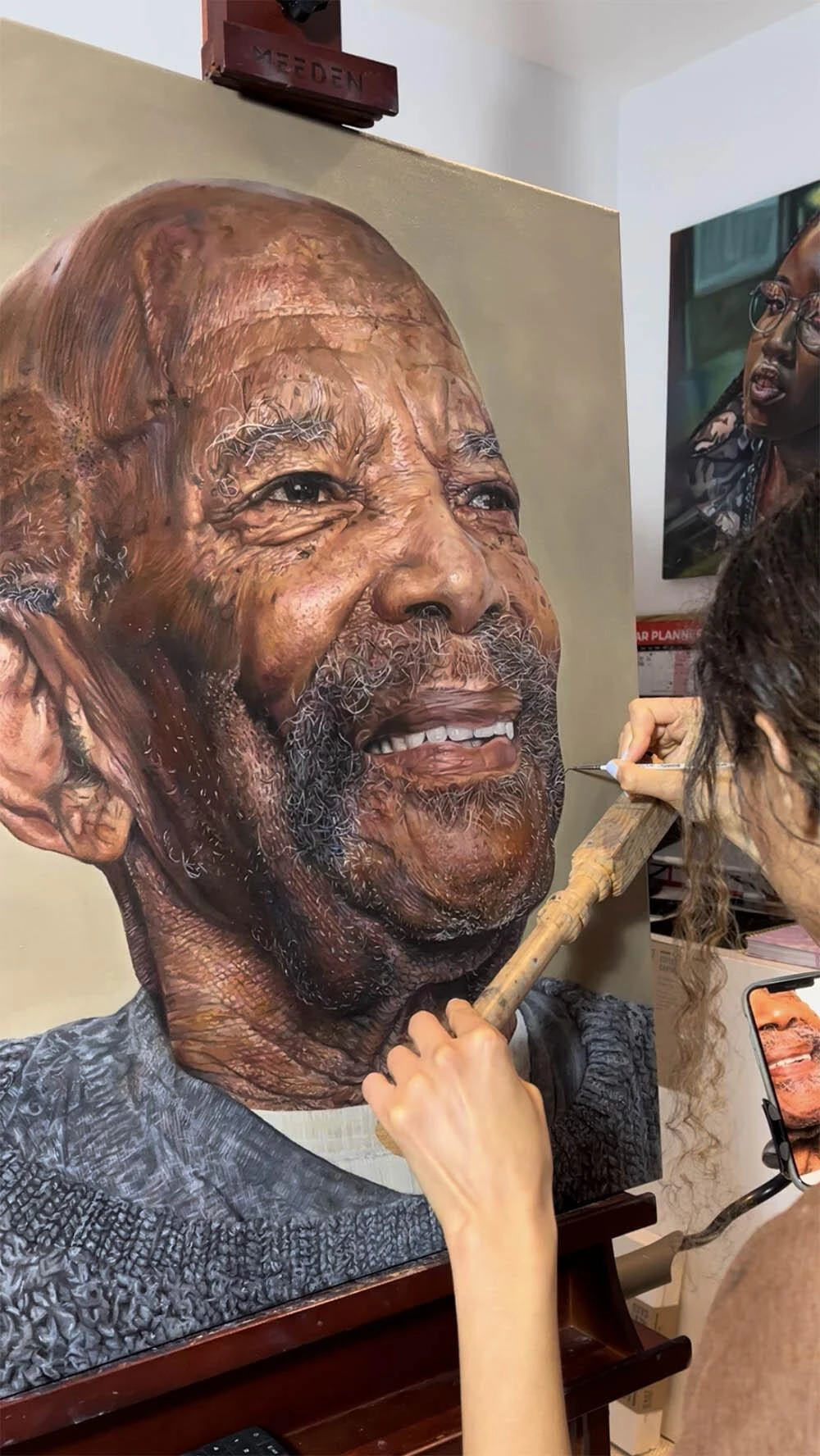
There’s an extraordinary level of precision in your work. How do you balance technical accuracy with keeping the painting feeling alive, rather than allowing realism to become the sole focus?
I love finding the detail in photographs and honing in on it. While I want the likeness to be correct, I also like to leave certain skin textures unblended, rather than smoothing them into something airbrushed. Otherwise you just end up with a photorealistic painting that might as well be a photograph. I like it when a portrait becomes more interesting the closer you get to it, when you can still see each brushstroke.
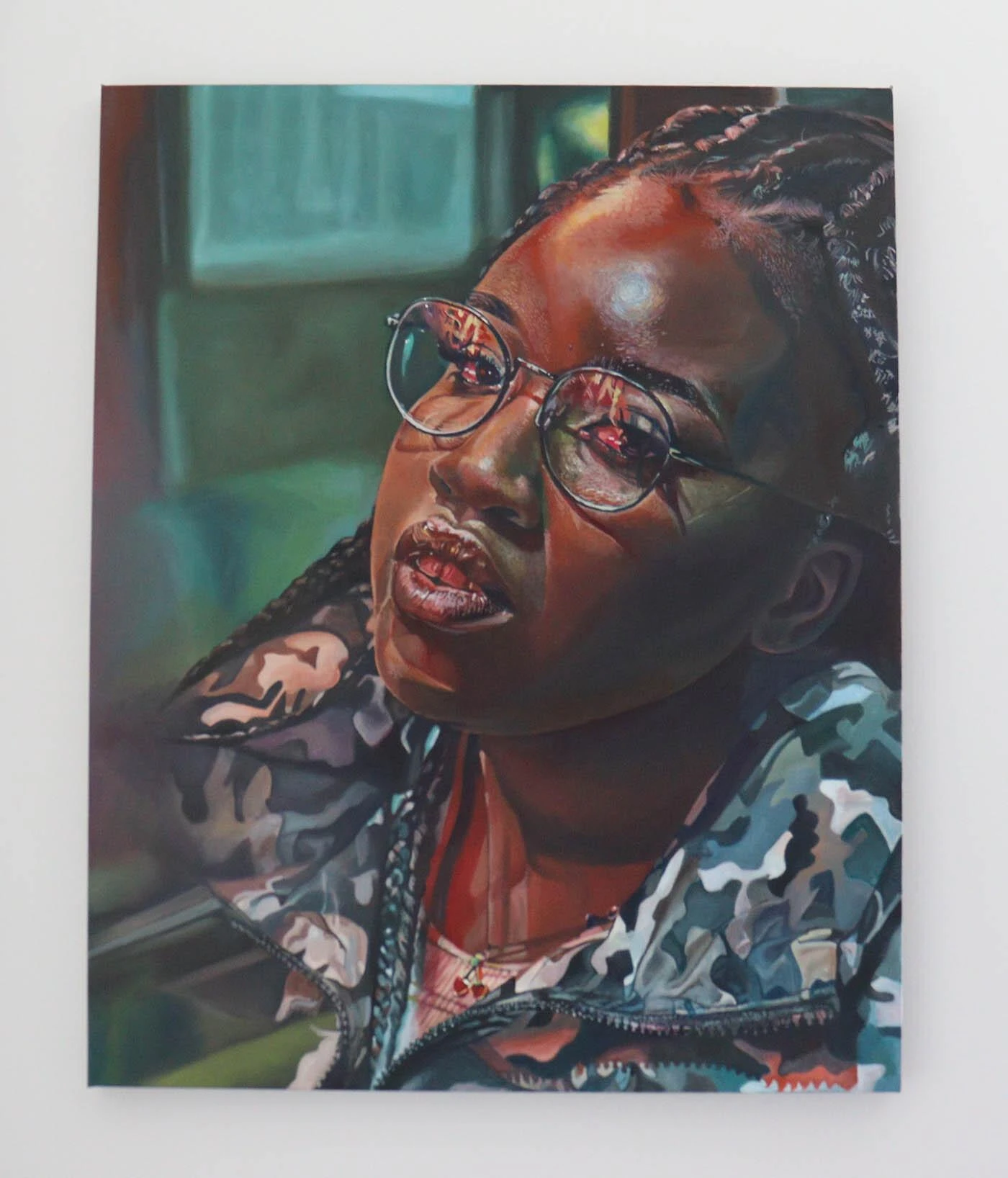
Once I’m home, I’m usually desperate to go through the photos; I’m both excited and nervous since I know I can’t go back and take any more. Once I’ve narrowed it down to about three photos, I’ll often send them to the sitter to see which they like best.
The chosen photo becomes my reference for the painting.
The portrait itself is built up in layers. I prime the canvas with gesso, then draw the portrait on top in pencil. A thin first layer of oil paint maps out all the colours; the next, thicker layer focuses on the dark areas; and the layer or two after that pick out detail and light. A couple of months after it’s finished, I varnish it, and then it’s either ready to go or off to the framer.
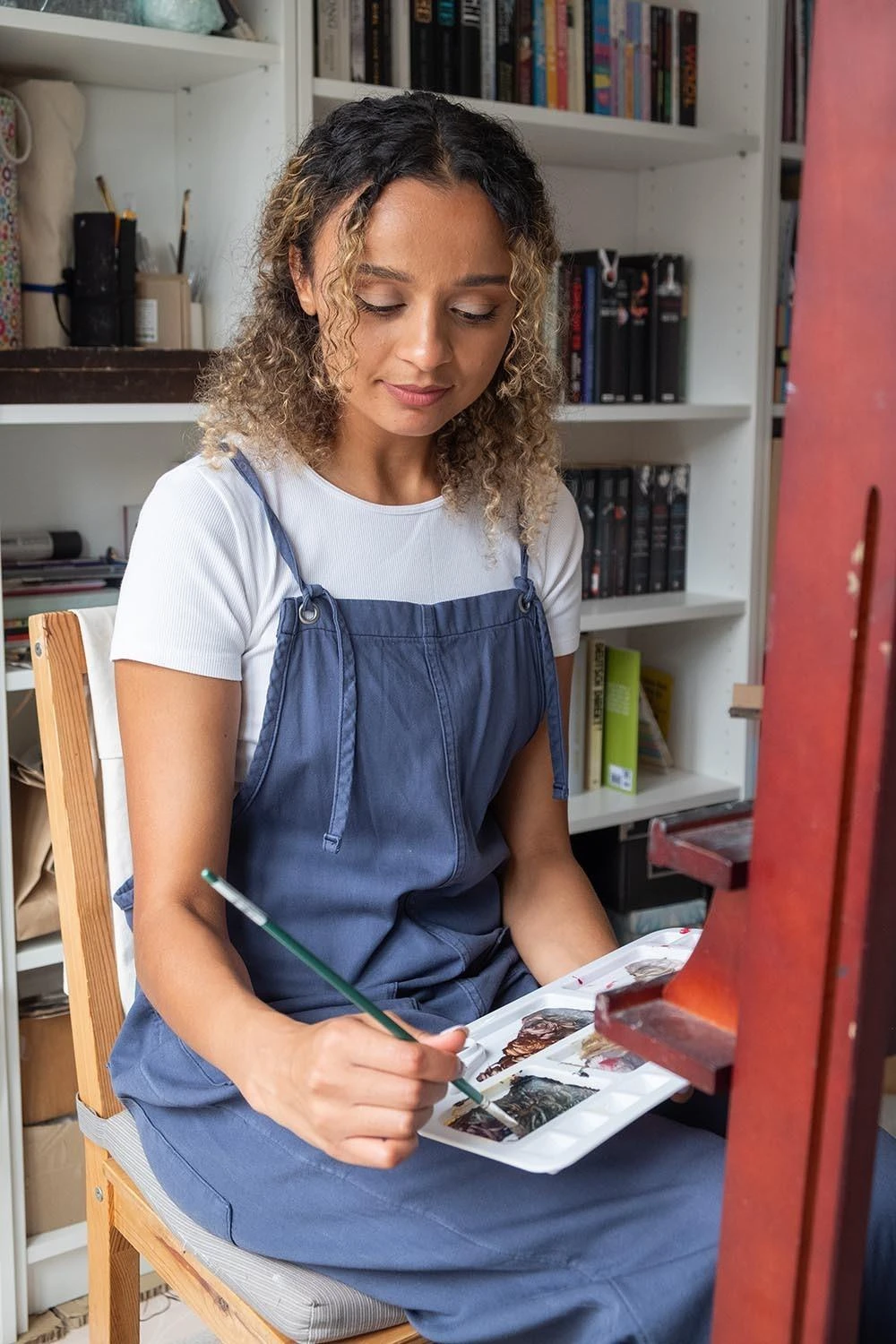
You’re a self-taught painter and have developed a very distinctive approach to portraiture. How has learning through your own practice influenced the painter you’ve become, and what have been the biggest discoveries along the way?
I’d never call myself a hundred per cent self-taught, because I was first introduced to oil paints in my A-Level art course. Without learning how to mix oils with solvent and build up paint in layers, I never would have begun my journey in oil painting, so big shout out to my school teacher, Andy! But I’ve taken it much further since then, and everything I’ve learned along the way has come through trial and error, and the occasional YouTube video. I never learned to paint in the traditional Florentine style of the old masters, much as I’d have liked to. But I think that has its advantages; means my style has become entirely my own, and I’m proud of how far I’ve come.
I also improve my skill with every new painting, so the learning never really stops. Some of my biggest discoveries have been around colour: how ‘white’ is almost never really just white, and how black is far deeper and more beautiful when you don’t actually use black to paint from the tube to create it. Colour theory is fascinating. And painting people means you start to look at everyone around you differently; they tend to fall into two categories: ‘great to paint’ and ‘not great to paint.’
Having painted subjects for major commissions including the Windrush portraits, as well as people whose stories may be less widely known, what do you think a painted portrait can communicate or preserve that a photograph cannot?
Because a painting takes so much longer to create than a photograph, there’s a real investment of time and care in it that gives it far more weight. When you look at a painting, you’re not just looking at the sitter, you’re looking at the artist too, and the relationship the two of them formed together. Here’s what this artist saw in this person, and here’s the labour they put into creating it.
There’s a wonderful chapter in Walter Benjamin’s Illuminations called ‘The Work of Art in the Age of Mechanical Reproduction.’ I love the line: ‘Even the most perfect reproduction of a work of art is lacking in one element: its presence in time and space, its unique existence at the place where it happens to be… The authenticity of a thing is the essence of all that is transmissible from its beginning, ranging from its substantive duration to its testimony to the history which it has experienced.’
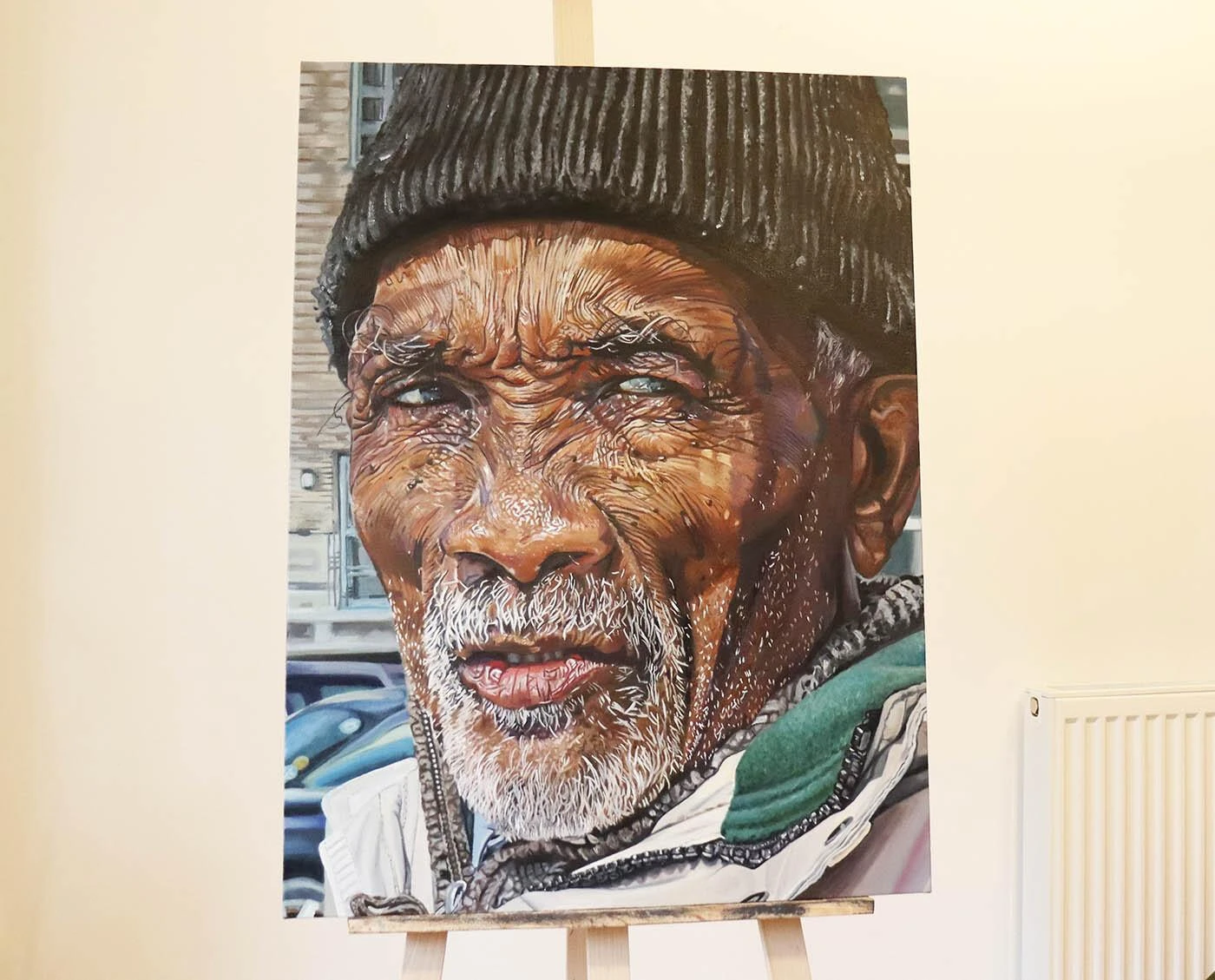
Paintings are more than just visual representations of people; they’re actual things — created at a specific moment in history, at a specific point in an artist’s life, existing in space and made from real, tangible materials. I’m often overwhelmed by a feeling of closeness to the artist when I stand in front of a Rembrandt, or find myself held back behind the railings around the Mona Lisa, knowing I’m occupying the same space as the original painting, made by an artist who lived in an entirely different time. I think that’s why paintings become so much more valuable as time goes on. One day the artist will be gone, and the sitter will exist only as a memory, but the physicality of the painting keeps the artist alive, in some ways, even more than it keeps the sitter alive. Every brushstroke and mark brings us tantalisingly close to a real person who once existed, and to the choices they made at that time. That preservation of a precise moment in time and space is what makes standing in front of a painting so remarkable.
Check out more of Chloe's work on her website chloecoxartist.com and be sure to follow her on Instagram @chloeoxartist
Add To List
Add a Wishlist
form to add wishlist here